


How Much Should You Water an Established Lawn?
One of the most common lawn watering mistakes we see in the Joplin area is watering too lightly or too frequently. Once your lawn is established, the goal shifts from “keeping seed alive” to promoting deep roots, drought resistance, and long-term lawn health.

The General Rule: 1.5” of Water Per Week
Most established lawns in Southwest Missouri perform best with approximately 1 to 1.5 inches of total water per week during active growing periods and summer heat. That total includes both rainfall and sprinkler irrigation. Instead of watering a little bit every day, we recommend:
0.5” of water per application
2-3 watering days per week
Deep, thorough soak cycles
This encourages water to soak deeper into the soil profile where the roots can access moisture longer between watering cycles.

Why You Should Avoid Daily Watering
Daily shallow watering often creates shallow root systems. When grass roots stay near the surface, lawns become:
More susceptible to drought stress
More dependent on constant watering
More vulnerable to heat damage
More prone to fungus and disease issues
Frequent surface moisture also creates ideal conditions for:
Brown patch fungus
Dollar spot
Root rot
General turf disease pressure
Deep watering with rest periods between cycles allows the soil surface to dry out while encouraging stronger, deeper root growth.
Cool Season vs Warm Season Lawns
Not all lawns in Southwest Missouri have the same watering needs.
Understanding the difference between cool season and warm season turf is extremely important when setting sprinkler schedules.
Cool Season Lawns (Tall Fescue)
Tall fescue is one of the most common lawn types in the Joplin area.
Cool season grasses:
Grow most aggressively during spring and fall
Stay green longer into winter
Typically require watering from approximately March through October
Prefer cooler temperatures
Struggle during extended summer heat, even with irrigation
Tall fescue lawns can still experience stress in July and August despite proper watering. During periods of extreme heat and humidity, fescue naturally slows down and may temporarily thin, discolor, or struggle.
The goal during peak summer is often lawn survival and root protection — not necessarily perfect appearance.
Benefits of cool season lawns:
Green for more months of the year
Softer texture
Better winter appearance
Faster spring green-up
Challenges:
Higher summer water demand
Greater heat stress
More disease pressure during humid weather
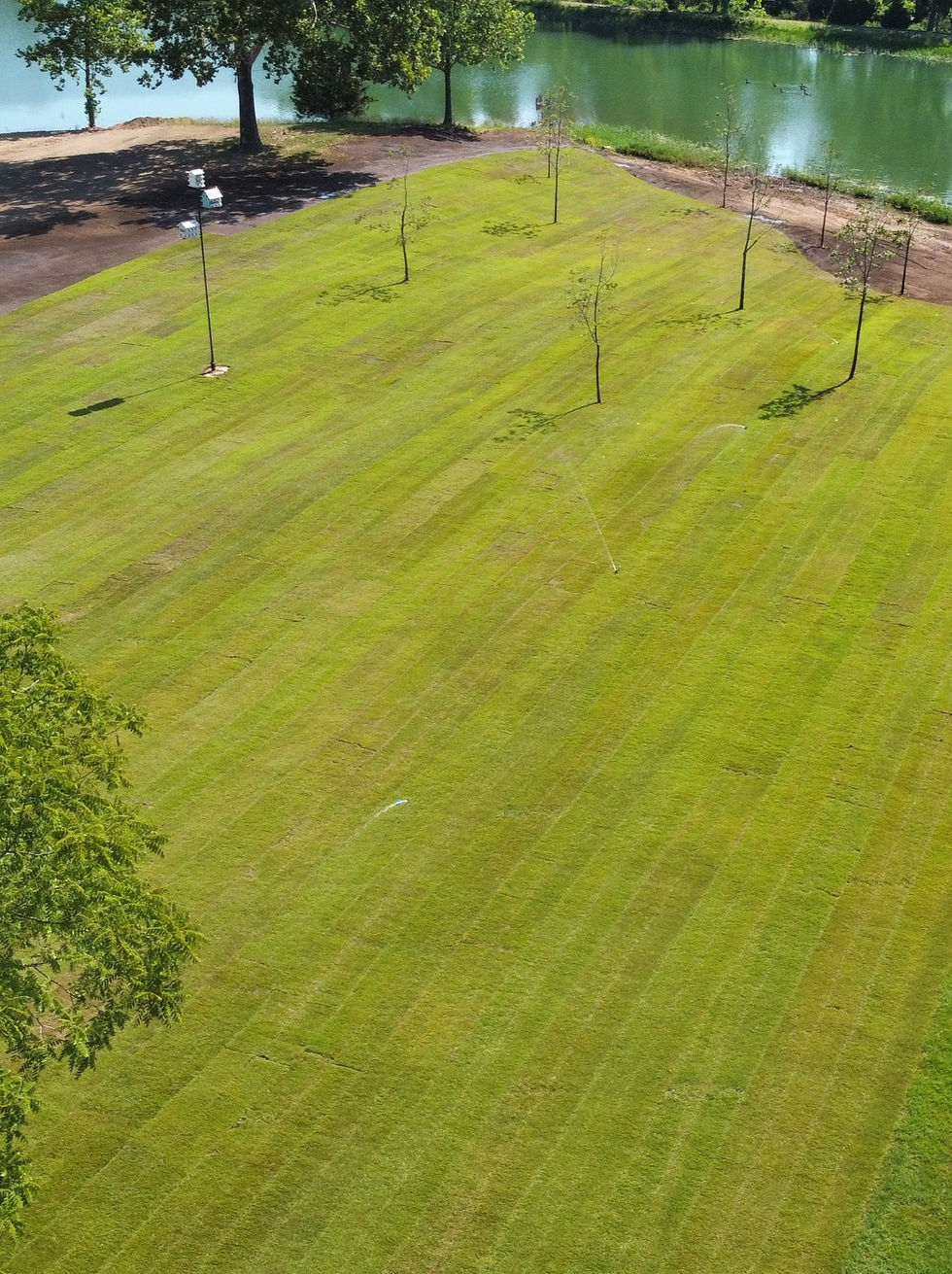
Warm Season Lawns (Bermuda & Zoysia)
Warm season grasses behave very differently.
Bermuda and Zoysia:
Thrive during hot summer weather
Often require significantly less irrigation overall
Typically need regular watering mainly from approximately May through September
Become dormant and brown during colder months
While fescue struggles in July and August, warm season lawns often look their best during the hottest part of summer.
Benefits of warm season lawns:
Excellent heat tolerance
Lower summer water requirements
Strong drought resistance
Better performance during extreme temperatures
Challenges:
Brown dormant appearance during winter
Later spring green-up
Shorter overall green season
Seasonal Watering Expectations
Many homeowners expect lawns to remain perfectly green year-round with the same watering schedule. In reality, irrigation should constantly adjust with the seasons.
Spring
Cool season lawns may require supplemental watering surprisingly early if rainfall is limited. However, we usually receive more than ample rainfall, sometimes through May.
Summer
This is peak irrigation season for both turf types, though cool season grasses will require more attention and still may show heat stress.
Fall
Cool season lawns often rebound aggressively as temperatures cool. Fall is one of the best times to strengthen fescue root systems. Fall is also an excellent time to over-seed your fescue lawns!
Winter
Most lawns require little to no irrigation while dormant unless conditions become unusually dry. Also, freezing temperatures can damage sprinkler components so we recommend winterization sometime in September/October.

Modern smart irrigation controllers can automatically adjust watering schedules based on:
Weather conditions
Rainfall
Temperature
Seasonal evapotranspiration rates
At Jasper Ridge, we install and service smart sprinkler systems designed to improve lawn health while reducing unnecessary water usage.
Watering Timing Matters
For best results:
Water early in the morning
Avoid evening watering when possible
Reduce watering during cooler periods
Adjust schedules throughout the season
Early morning watering minimizes evaporation while reducing overnight moisture that can contribute to disease.
Need Help Adjusting Your Sprinkler System?
If your lawn is showing signs of stress, dry spots, runoff, or overwatering, we can help evaluate and adjust your irrigation system for better performance and efficiency.
Jasper Ridge provides sprinkler system installation, repair, seasonal adjustments, and smart controller upgrades throughout Joplin, Carl Junction, Webb City, and surrounding Southwest Missouri communities.


